



Online reputation refers to the presence and influence of a brand, person, organization, or product based on available information and public feedback. Online reviews have become one of the most important tools for measuring reputation, especially for brands. In today’s AI-driven age, your digital impression is often more important than your offline reputation.
When a user discovers a new brand or product they’re interested in, they typically check reviews, ratings, comments, and overall reputation across various websites before making a buying decision. Customer feedback plays a crucial role in shaping that decision.
Discover the best online reputation management strategies to protect, enhance, and maintain your brand’s digital presence.
Why Online Reputation is Important
Your online reputation is your digital first impression—it shapes how customers, partners, and even potential employees perceive you before they meet you. A strong, positive reputation builds trust, attracts opportunities, and increases sales, while a negative one can drive people away, hurt revenue, and damage long-term credibility.
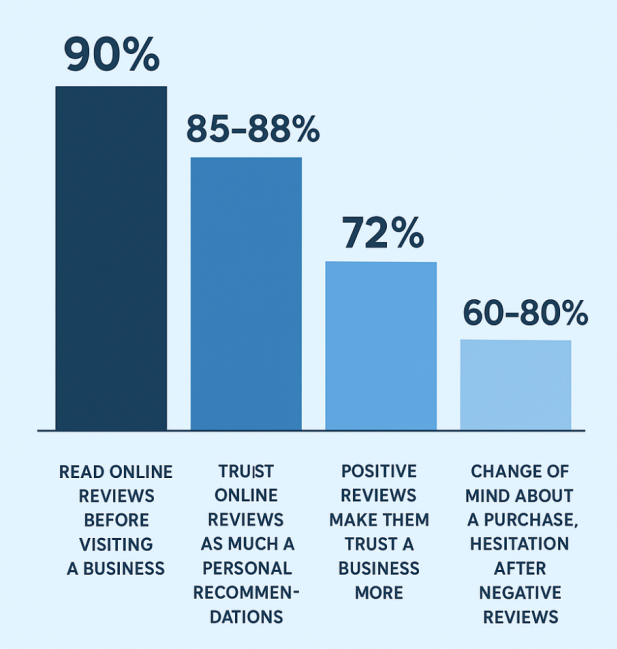
In today’s world, where over 90% of consumers research online before making a decision, your reputation isn’t just part of your brand—it is your brand.
Consequences of a Brand Reputational Damage
When a brand’s reputation takes a hit, the effects can be far-reaching and long-lasting. Common consequences include:
- Loss of Customer Trust – Once credibility is questioned, winning back confidence becomes difficult.
- Decline in Sales & Revenue – Negative search results or reviews can directly reduce conversions.
- Lower Search Visibility – Harmful content can dominate page one of search results, pushing positive assets down.
- Difficulty Attracting Talent – Top candidates may avoid brands with poor public perception.
- Strained Partnerships – Investors, suppliers, and collaborators may hesitate to work with a tarnished brand.
- Long-Term Brand Image Issues – Even after addressing the root cause, negative perceptions can linger online.
- Reduced Customer Acquisition – Negative sentiment discourages potential customers from engaging with the brand.
- Erosion of Customer Loyalty – Existing clients may lose confidence and shift to competitors.
How to Recover from Damaged Online Reputation
Recovering from a damaged online reputation requires a strategic, consistent approach that addresses both the root cause of the issue and its visibility in the digital space. It’s not just about removing or countering negative content—it’s about rebuilding trust, amplifying positive narratives, and ensuring your brand’s online presence reflects credibility and value. With the right methods, you can gradually restore confidence among customers, stakeholders, and the wider public.
Small business reputation management helps entrepreneurs build trust, attract customers, and stay competitive by maintaining a positive online image. It focuses on monitoring feedback, responding to reviews, and promoting positive content.
Online reputation management for small businesses ensures your brand stands out in search results by suppressing negative content, highlighting success stories, and leveraging the right tools to protect your credibility.

Step 1 – Audit Your Online Reputation
- Search your brand name (in incognito mode & different locations) in google with terms like “your brand name” + reviews
- Check Google, Bing, YouTube, Reddit, social media, and brand review platforms.
- Tools to check online reputations are
- Mention.com
- Brand24
- Awario
- Reputation.com
If bad reviews start appearing in search results or negative comments surface on social platforms, it’s a clear signal that immediate action is needed to protect your brand’s image.
Step 2 – Remove What Can Be Removed
After finding bad reputation segments online, list them all. Create an Excel sheet and group them accordingly, such as SERP results, Facebook comments, etc. Now start taking action one by one.
- Fake or Competitor-Generated Reviews – Request removal from the website owner or platform as a violation of terms like reddit, facebook, Instagram.
- Genuine Reviews – Respond with professionalism, empathy, and a solution-focused approach.
- High-Severity Cases – Use top online reputation management tools like NetReputation or ReputationDefender to manage and suppress negative content effectively.
 Step 3 – Suppress Negative Results with Positive Content
- Create and optimize owned assets, including website pages targeting the brand name, as well as blog posts, case studies, and news updates.
- Build high-ranking third-party profiles:
- LinkedIn, Crunchbase, Medium, YouTube, Google Business Profile, Trustpilot, SiteJabber, Capterra and Clutch.
- Publish press releases to trusted news outlets like PR Newswire, Business Wire, Globnewswire.
Step 4 – Leverage Social Media SEO
- Create profile pages using the exact brand name, keep them active, and post regularly. Engage the same audience across multiple platforms, share published website content on social media, and focus on helpful, engaging posts.
- For efficiency, use tools like Buffer or Hootsuite for scheduling and Social Blade for tracking growth.
- Tools to help:
- Buffer / Hootsuite (for scheduling)
- Social Blade (to monitor growth)
Step 5 – Build Backlinks to Positive Pages
- Get brand mentions in niche blogs, interviews, podcasts. Outreach blogs with high domain authority websites which allow content contributors.
- Use guest posting and partnerships to strengthen positive pages’ SEO and improve their ranking in SERPs.
- Tools to use:
- HARO / Help a Reporter Out
- Ahrefs for backlink analysis
- Qwoted Connects brands with journalists
- SourceBottle responds to media requests and gets featured in articles.
Step 6 – Monitor & Maintain
Continuously monitor SERPs for bad reviews and comment links to ensure that negative results do not reappear or gain visibility. Implement monthly reputation check-ins to review brand search results, track ranking changes, and take proactive measures—such as boosting positive content or updating SEO strategies—to maintain a strong and favorable online presence.
- Tools to use:
- Google Alerts
- BrandMentions
- SEMrush Position Tracking
Conclusion
Online Reputation Management (ORM) is an ongoing process, not a one-time fix. Take proactive steps in managing your digital footprint—such as monitoring mentions, optimizing positive content, and engaging with the audience—before a crisis arises. This ensures that you stay in control of your brand narrative.
In today’s competitive digital landscape, investing in the right online reputation management solution can make the difference between a thriving brand and one that struggles to gain trust. Selecting tailored online reputation management packages ensures your strategy addresses your unique needs, while applying proven online reputation management tips keeps your efforts effective and consistent. By integrating smart online reputation management social media practices, you can safeguard your image, amplify positive content, and build lasting credibility with your audience.
[/vc_column_text][/vc_column][/vc_row]
